
ANALYSIS
Why the AFP's smaller October tally of Chinese ships is not a sign of easing pressure at sea
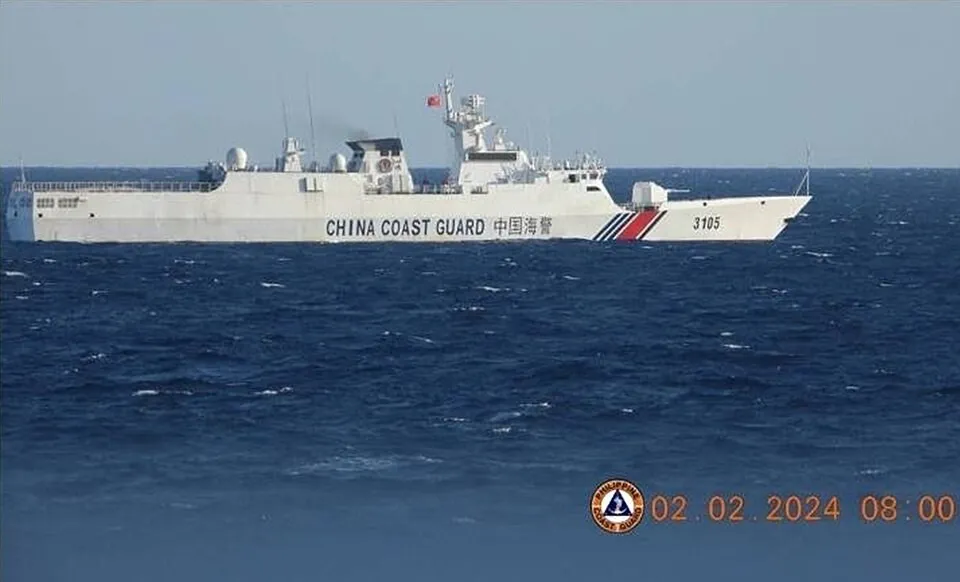
The AFP said on 3 November 2026 it counted 80 Chinese ships at four West Philippine Sea features in October, down from 101, yet 33 were warships.
TAIPEI —
This article is an original Taiwan Defence analysis based on the cited public sources. It distinguishes reported facts from analytical judgments and does not represent original field reporting.
The Armed Forces of the Philippines said on 3 November 2026 that the Philippine Navy counted 80 Chinese naval and coast guard vessels at four key features in the West Philippine Sea during October, down from 101 in September. On its face, that is a fall of about a fifth in a single month.
Read closely, the breakdown does not support a story of retreat. Of the 80 ships, 33 belonged to the People's Liberation Army Navy and 47 to the China Coast Guard, so warships made up roughly two in every five sightings. The larger point is where those warships were: they outnumbered coast guard cutters at the two shoals nearest Philippine outposts and supply routes off Palawan. That is a pattern of where Beijing chose to concentrate its ships, and it says more than the headline drop.
The numbers
Bajo de Masinloc, also called Scarborough Shoal, again drew the largest presence, with 41 vessels, 30 of them coast guard and 11 naval. At Ayungin Shoal the Navy recorded 24 ships, 13 naval and 11 coast guard. Escoda Shoal had 11, eight of them naval, and the Pag-asa Islands had four, one naval and three coast guard.
The Daily Tribune also reported the Navy's wider picture for the month. Across its broader maritime areas of interest, the Navy said it tracked 19,051 domestic and foreign vessels, 15,466 of them foreign. Of those challenged by radio, 14,054 answered and 4,997 did not.
AFP spokesperson for the West Philippine Sea, retired Rear Admiral Roy Vincent Trinidad, said the figures showed continued illegal, coercive, aggressive and deceptive conduct by China that undermines the rules-based order and challenges Philippine sovereign rights. He said the military would answer with sustained presence, better maritime domain awareness, closer coordination between agencies and continued capability development.
Bombo Radyo reported that Trinidad said the AFP keeps documenting each sighting and shares the details of coercive or aggressive Chinese actions with the Department of Foreign Affairs.
Evidence and constraints
The split by feature matters more than the total. Scarborough accounted for just over half of all ships and nearly two-thirds of the coast guard vessels counted, which fits a pattern of using law-enforcement hulls to assert control over a fishing ground. At Ayungin and Escoda, by contrast, 21 of the 35 ships were naval. A heavier navy presence near the BRP Sierra Madre outpost and the Escoda approaches sends a military signal that a coast guard patrol does not.
There are limits to what the figures show. The AFP releases do not say whether the totals count separate hulls or repeated sightings of the same ships, and they cover only four features. A lower number can also reflect weather, rotations or where Philippine patrols were looking. The data supports a conclusion about mix and location, not a precise measure of intent.
The legal backdrop is unchanged. Beijing claims almost all of the South China Sea, a route for more than three trillion dollars of trade each year, including areas also claimed by the Philippines, Vietnam, Indonesia, Malaysia and Brunei. China rejects the 2016 arbitral ruling that found its sweeping claims had no legal basis.
The broader monitoring figures point to the scale of the task facing the Navy. Roughly one in four vessels tracked across its wider areas of interest did not respond to radio challenges in October. Each of those has to be identified by other means, which is why the AFP keeps stressing maritime domain awareness and coordination with other agencies alongside its patrols.
What could change
The November count will show whether October was a dip or a new baseline. A further fall in coast guard numbers at Scarborough would be notable; a steady or rising PLA Navy share at Ayungin and Escoda would suggest Beijing is leaning more on warships to back its claims near Philippine positions. Any renewed confrontation during resupply runs to the Sierra Madre would also show whether the navy ships counted there are simply present or are actively shaping how Philippine missions are conducted.
Why it matters
Monthly ship counts are one of the few public, regular measures of Chinese pressure in the South China Sea, and they are easy to misread. The October data shows a smaller fleet, not a gentler one. For Manila and its partners, the warship share near Philippine-held positions is the number to watch, because it is the clearest sign of how far Beijing is prepared to put its navy, not just its coast guard, behind its claims.
Sources
More in Analysis
Why Malabar 2026's sub-hunting focus matters more for Taiwan than the Quad summit optics
Malabar 2026 opened on 5 November with the Quad navies rehearsing submarine hunts while China kept more than 100 ships at sea around Taiwan's approaches.
TaiwanDefence · 3h ago · 4 min read
Why China's dark-ship coast guard probes at Pratas matter more than the expulsion count
On 31 October 2026 a Chinese coast guard ship ran dark into Pratas restricted waters, the 13th such entry this year, and analysts say the real test is supply access.
TaiwanDefence · 3h ago · 4 min read

Why CENTCOM's unmanned surge matters more for Taiwan as a joint-force scaling template
In November 2026 the Pentagon said Central Command received more than 25,000 unmanned systems this year, a fielding it frames as the start of joint-force scaling toward the Pacific.
TaiwanDefence · 5h ago · 4 min read
Discussion (0)
Comments are not currently available.