
ANALYSIS
Why the drop to one PLA aircraft near Taiwan on 9 November 2026 does not mean Beijing has eased off
Taiwan counted one Chinese military aircraft on 9 November 2026, down from 49 a week earlier, but the warships stayed and the pressure shifted to the sea.
TAIPEI —
This article is an original Taiwan Defence analysis based on the cited public sources. It distinguishes reported facts from analytical judgments and does not represent original field reporting.
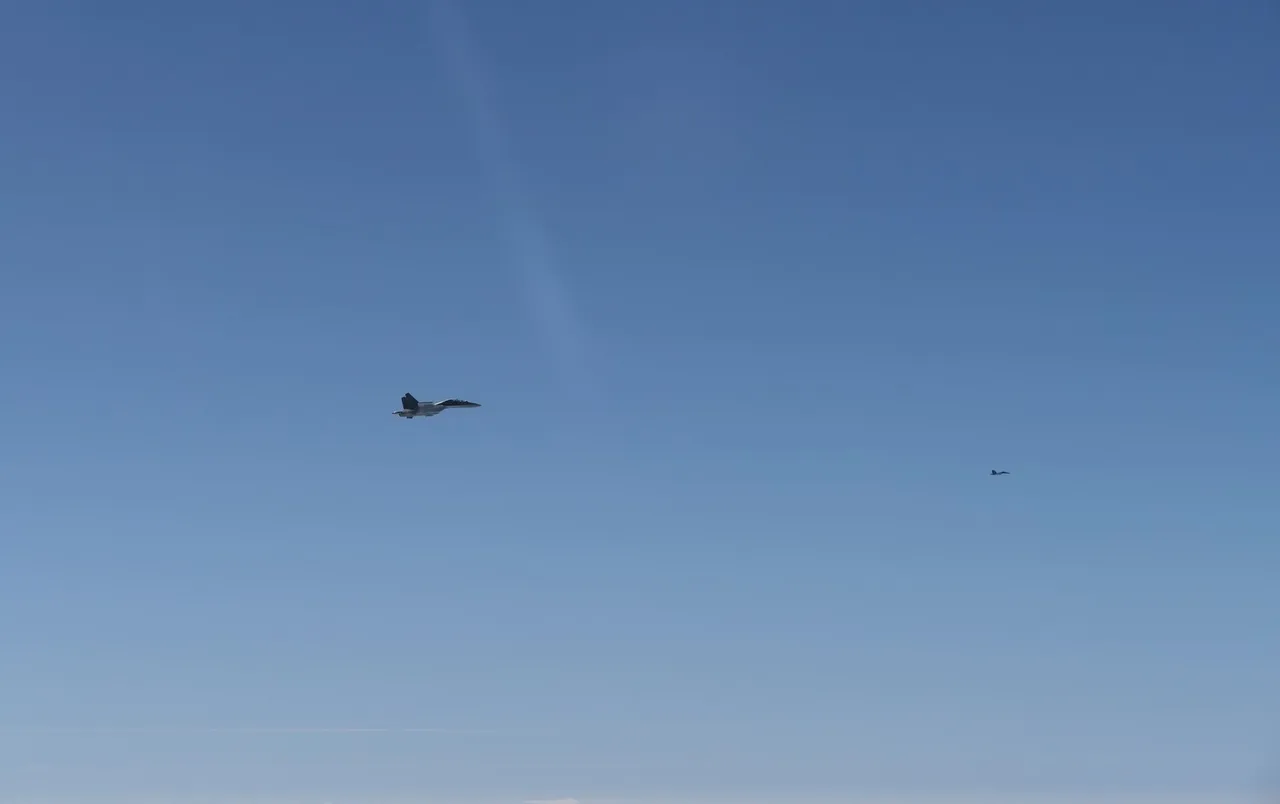
On 9 November 2026, Taiwan's Ministry of National Defense reported only one Chinese military aircraft around the island in the 24 hours to 6 a.m., alongside seven People's Liberation Army Navy warships and one other official Chinese ship, according to Business Insider Taiwan and Taiwan News. The lone aircraft operated in Taiwan's northern airspace, and Business Insider Taiwan said the ministry's track chart showed a helicopter flying off the north coast between 2:10 p.m. and 5:30 p.m. the previous day.
The figure capped a steep three-day slide. Business Insider Taiwan noted that the daily aircraft count had fallen from 11 to four and then to one, and that the four aircraft reported a day earlier had all been to the southwest, while the warship count rose by one. Taiwan News said Taiwan again responded with aircraft, naval ships and coastal missile systems, and that the ministry had tracked Chinese aircraft 129 times and ships 91 times so far in November.
A week earlier the picture looked very different. The South China Morning Post reported that the ministry counted 49 PLA aircraft sorties in the 24 hours to 6 a.m. on 3 November, the highest single-day total of the year, falling to 22 a day later. Public Television Service reported that the ministry also tracked six warships and six official ships that day, and that Defence Minister Wellington Koo said PLA forces were conducting sea and air training in the airspace southwest of Taiwan.
The South China Morning Post added that Joseph Wu, head of Taiwan's National Security Council, had disclosed more than 100 PLA Navy and Chinese coast guard vessels operating across the western Pacific at the same time, including the Liaoning carrier group in the Philippine Sea, while the ministry's own count near Taiwan stayed at about a dozen ships because it covers only the island's immediate air and sea zones.
The argument
The aircraft count is the most visible and the most volatile measure of Chinese pressure, and its collapse to a single helicopter says more about where Beijing chose to spend effort this week than about any easing. Across the same stretch the warship count reported on the days cited here held at six or seven, and the November totals show ship sightings not far behind aircraft. The pressure appears to have shifted from bursts of air activity to a steadier naval and coast guard presence that is harder to read from a daily headline.
Evidence and constraints
The supporting signals come from the sea. Public Television Service reported that Ocean Affairs Council chief Kuan Bi-ling said Chinese coast guard ships in waters east of Taiwan were escorting Chinese research vessels, and that she judged both the research ships and their buoys to carry battlefield-preparation or political purposes. The same report described unidentified Chinese-made light buoys with painted serial numbers drifting near Taiwan and Penghu, and four Chinese coast guard ships entering restricted waters off Kinmen on 2 November.
There are limits to this reading. The ministry's daily figures cover only the zones around Taiwan, so a quiet day near the island can coincide with heavy activity farther out, as the gap between the ministry count and Wu's figure showed. The 49-sortie peak also stayed well below past surges: the South China Morning Post calculated 130 aircraft on 30 December last year and 77 a day later, and a record 153 during the Joint Sword-2024B drills in October 2024. One quiet day is a weak signal in either direction.
Taken together, the record suggests a pattern of short air surges riding on a persistent maritime baseline. A drop in sorties without a matching fall in warships and coast guard deployments looks more like a change of emphasis than a pause, and it fits the steady use of research ships, buoys and coast guard patrols as pressure tools that cost Beijing little and keep Taiwan's forces busy.
What could change
Three things would test this view. A sustained fall in daily warship counts, not just aircraft, would point to a real easing. A renewed air spike tied to a named exercise would show that the lull was a reset between surges. And any official account of what the drifting buoys actually measure would clarify whether the sea-based activity is preparation for operations or mostly signalling.
Why it matters
Taiwan's public debate often tracks the daily aircraft number, but the 9 November 2026 count shows how misleading that single figure can be. If Beijing is shifting pressure toward ships, coast guard vessels and survey activity, Taiwan's surveillance, coast guard endurance and maritime domain awareness matter more than the size of any one day's air tally, and a quiet sky should not be taken as a sign that the pressure has lifted.
Sources
More in Analysis
Why a November 2026 call for cheap Steelfin interceptors runs into T-Dome's command-network gap
A Taiwan defence think tank urged on 9 November 2026 that Taipei weigh Anduril's low-cost Steelfin, but cheap missiles need links T-Dome still lacks.
TaiwanDefence · 1h ago · 4 min read
Why Taiwan's November 2026 push for its own satellite launches matters for wartime resilience
Lai's 9 November 2026 space speech put satellite links and launch access under the security council, but Taiwan's own launch range is not due until 2032.
TaiwanDefence · 3h ago · 3 min read
Why the November 2026 F-16 weapons report matters more for Taiwan than the new jets' arrival
A defence ministry report covered on 9 November 2026 shows Taiwan's new F-16s will fly for years before their glide bombs and jamming pods are complete.
TaiwanDefence · 19h ago · 4 min read
Discussion (0)
Comments are not currently available.