
ANALYSIS
Poland's Patriot delay is a warning for Taiwan's next big interceptor order against China
Poland said on 12 October 2026 its PAC-3 MSE deliveries will slip. Taiwan's planned buy to stop China's missiles joins that same queue.
TAIPEI —
This article is an original Taiwan Defence analysis based on the cited public sources. It distinguishes reported facts from analytical judgments and does not represent original field reporting.
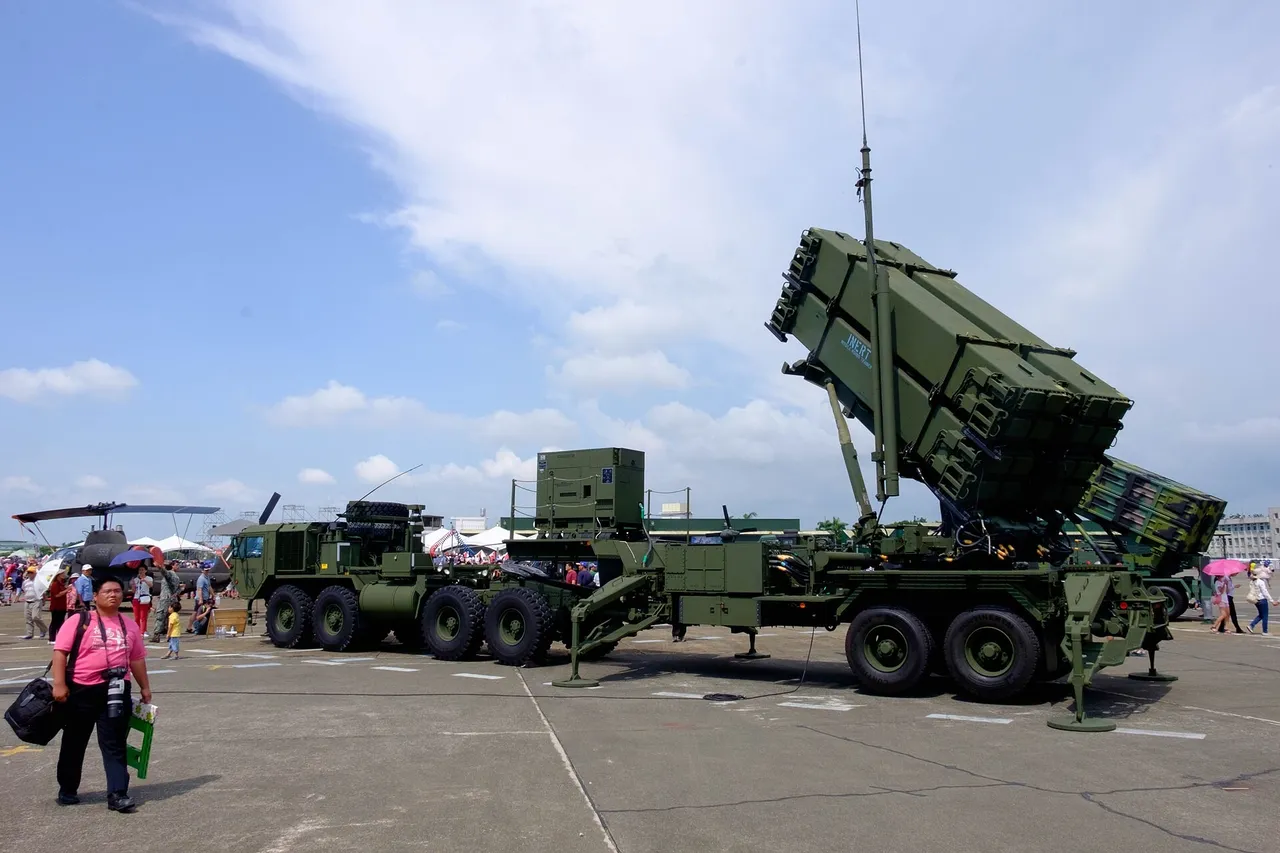
At the Warsaw Security Forum on 12 October 2026, Polish army operational commander Gen. Ireneusz Nowak said deliveries of some US weapons to Poland would be delayed, and that the slip was most visible in PAC-3 MSE Patriot interceptors, which he said would be late for sure. Reuters tied the warning to its April report that US officials had told European governments some contracted deliveries were likely to slip as the Iran war drew down American stocks.
Poland's defence minister, Wladyslaw Kosiniak-Kamysz, used the same forum to call for Patriot production lines and maintenance facilities to move to Europe, arguing that this would make both the United States and Europe more independent. His deputy, Magdalena Sobkowiak-Czarnecka, said American warehouses were empty and that Warsaw now attaches co-production, local maintenance and local suppliers as conditions to new foreign purchases.
RMF24, the Polish broadcaster, reported that Nowak said the Baltic states were also affected, that he was not sure HIMARS contracts would be delivered on time either, and that the delays stem from US commitments in other theatres of war. Poland is buying eight Patriot batteries, 64 launchers in all, under its Wisla programme, the outlet noted.
A day later in Washington, Lockheed Martin's integrated air and missile defence chief, Jason Reynolds, told Defense News at the AUSA convention that the company was weighing new partnerships to build PAC-3 interceptors in Europe, most likely with Germany's Diehl Defence, and that a cheaper single-pulse ACE variant could be the starting point for Ukraine. He also stressed that the US government, not Lockheed, decides where Patriot interceptors may be built abroad.
Taken together, those statements are the clearest public signal so far this autumn of how tight the PAC-3 MSE pipeline still is. Poland is a frontline NATO state with contracts already signed and a government willing to pay for factories, and it is still being told to wait. Taiwan, buying the same missile to counter the People's Liberation Army Rocket Force, has far less leverage over where it sits in the queue.
Taiwan is already standing in that queue. RMF24 noted that Lockheed Martin builds only several hundred PAC-3 MSEs a year and has pledged to reach about 2,000 a year by 2030. The Liberty Times reported on 5 August 2026 that Taiwan's first 102 MSEs, ordered in 2019 with leftover funds for about NT$20 billion, began arriving early this year, that Washington had reaffirmed the whole batch would ship during 2026, and that the rounds were being mixed into the army's existing Patriot launchers to deepen ballistic missile defence around key bases.
Nowak said that deliveries already under contract would face additional delays, and that is the category a much larger Taiwanese order would join once signed. The Liberty Times described a planned US package worth up to US$14 billion that would include 450 to 500 more MSEs, the IBCS integrated battle command system and LTAMDS radars for a fourth Patriot battalion meant to cover eastern Taiwan. Military sources warned then that Lockheed had told allies it could not guarantee delivery dates, that each missile takes about two years to build, and that licensed lines in Japan and Germany would not reach full output until after 2027.
The Polish warning makes that August caution look conservative. If US restocking after combat in the Middle East is now delaying a NATO ally's existing contract, an order from Taipei that has not yet entered production is likely to be scheduled behind US Army replenishment, Ukraine and European buyers who can offer co-production deals that Taiwan cannot. A battalion's worth of new interceptors that arrives in the early 2030s is still valuable, but it should not be counted as cover for the next several years.
Nowak also argued in Warsaw that Poland needs a full range of air defences, from cheap counter-drone systems to high-end platforms able to operate in contested airspace, rather than spending expensive missiles on cheap drones. Taiwan's version of that answer is home-built. The Liberty Times said the military was accelerating the National Chung-Shan Institute of Science and Technology's Strong Bow, an extended-range member of the Tien Kung III family, as a fallback, with an intercept altitude of up to 70 km that would let it form a layered defence with the US-made missiles.
If Lockheed only reaches about 2,000 MSEs a year by 2030, the wait for a second Taiwanese tranche could overlap with the years Strong Bow is meant to enter service, which makes the domestic missile less a supplement than a substitute in the near term. It also sharpens an unresolved question the same reporting flagged: whether Taiwan buys IBCS or builds its own system to link domestic and American interceptors. Without that link, more missiles from two sources could still mean two separate air defence pictures.
Three things are worth watching over the coming months. One is whether US delivery notices to Taipei start echoing the language Poland heard in Warsaw. Another is whether Taiwan's legislature protects Strong Bow funding rather than treating it as a bargaining chip in budget fights. The third is whether Washington's decisions on PAC-3 lines in Germany or elsewhere free any capacity for Asia at all. Until those answers come, Taiwan's defence against China's missile force rests on the 102 MSEs already arriving and whatever it can build at home.
Sources
More in Analysis
Cheap Blackbeard hypersonics could drain China's fleet defences, if US carriers can get close enough to Taiwan
Experts said on 12 October 2026 the US Navy's US$385,000 Blackbeard could exhaust Chinese ship defences. The catch is launching it near Taiwan.
TaiwanDefence · 12m ago · 4 min read

Lu Sheng 2 puts Taiwan's CM11s against M1A2Ts in a northern fight China would recognise
As of 13 October 2026, Lu Sheng 2 starting 14 October tests Abrams, CM11s, drones and C2 under Chinese military pressure.
TaiwanDefence · 3h ago · 3 min read
Japan's first ACSA fuel draw in the Philippines is logistics practice Taiwan would need
On 9 October 2026 Tokyo confirmed its ASDF drew fuel from the Philippine Air Force under ACSA for the first time during Doshin-Bayanihan drills.
TaiwanDefence · 21h ago · 4 min read
Discussion (0)
Comments are not currently available.