
Taiwan's military to buy 60,500 electronic casualty tags over three years to track wounded troops
The defence ministry told lawmakers the networked tags will send battlefield triage data to military hospitals and keep working offline when networks fail.
TAIPEI —
Taiwan's armed forces have decided to buy an electronic casualty tag system and will purchase 60,500 neck-worn tags over three years, from 2026 to 2028, so that information on wounded personnel can be recorded and tracked in real time, the Liberty Times reported on 13 October 2026. The plan was set out in the Ministry of National Defense's latest report to the Legislative Yuan asking lawmakers to release frozen funds in its 2026 budget.
The ministry told legislators that changes in the way wars are fought mean military medical facilities and designated emergency hospitals need to see a casualty's injuries, treatment and transfer details before the patient arrives. Digital tags let them give treatment advice earlier and raise survival rates on the battlefield, it said. The system pushes casualty data to military hospitals and regional emergency medical operations centres, so hospitals can see how casualties are spread across an area and shift staff and supplies accordingly.
The system has two parts: the electronic tag itself and a management system for medical capacity and evacuation. According to the ministry, the hardware consists of four items.
- A neck-worn electronic tag carried by the casualty
- A neck-worn E-PASS device used by medical personnel
- Resilient network node devices that relay and store data
- Rugged tablets for medics and command posts
The ministry said the figure of 60,500 tags was calculated from an assumed wartime casualty rate of 20 percent of personnel plus a 10 percent allowance for administrative turnover. Platform software licences are sized around the roughly 3,000 medical non-commissioned officers and enlisted personnel across the forces. Because each ambulance run is assumed to need a vehicle commander and a driver, about 1,500 users will be licensed, starting with vehicle commanders in first- and second-level medical units. Node management software will be installed at 27 locations, covering the service branches, theatre commands, command headquarters and military hospitals.
The equipment will be issued to medical units and military hospitals over the three-year period. The ministry also plans integrated drills every two months that bring together military, public and private hospitals, rotating among the theatre commands, so that emergency hospitals and the commands become familiar with each other's communications and procedures. A dashboard uses artificial intelligence and data integration to show casualty status, stocks of drugs and medical supplies, evacuation routes and how many patients each emergency hospital can still take.
On security, the ministry described five layers of protection. Access requires multi-factor verification that combines a physical E-PASS device, a personal PIN and a dedicated app. The tag's memory chip is hardware-protected so an ordinary phone cannot read it, and permissions are split by role among system administrators, mission managers, site managers and medical crews. Devices can keep working offline, signing records with a private key and queuing them locally until the network returns, and data is spread across several field nodes rather than held on one central server.
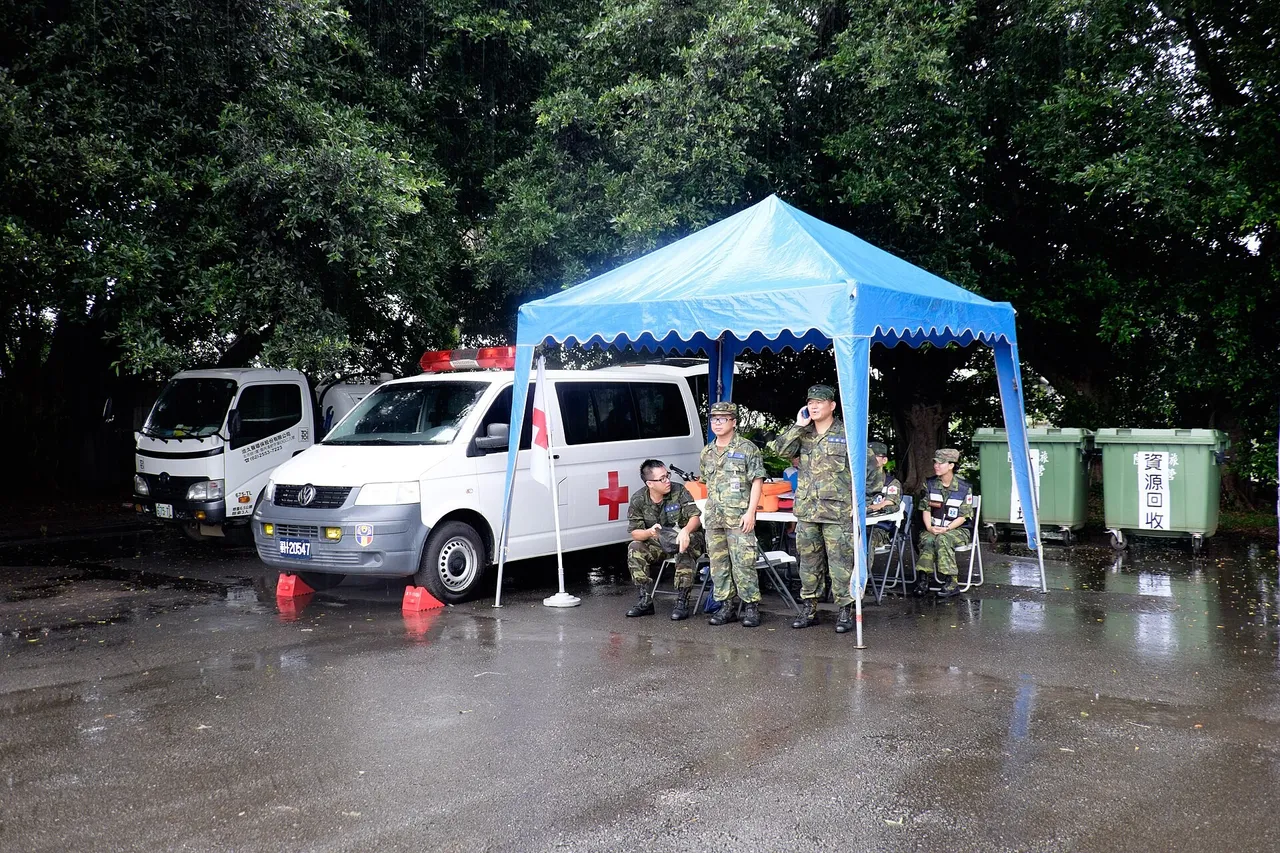
The tags have already been tried in exercises. During the Han Kuang 42 drills on 13 August 2026, medical units in Taoyuan simulating mass casualties tested them alongside a smart medical integration system. The tags lit up green, yellow, red or black to show each casualty's priority, and personnel scanned them with a phone app at each stage of evacuation, the Central News Agency and United Daily News reported at the time. The military said then that it would fall back on paper tags, radio and fax if networks went down.
When the system was shown at a medical technology exhibition in Taipei in December 2025, officers from the defence medical university's training centre said it would move to small-batch production after acceptance testing, with the eventual aim of issuing a tag to every service member. The new purchase covers a wartime casualty planning figure rather than the whole force.
Sources
More in Army
US Army expands Infantry Squad Vehicle requirement from 649 to nearly 12,000, GM Defense says
GM Defense says the Army now plans to field its light, unarmoured troop carrier across 39 mobile brigades, and that it is also making PAC-3 MSE missile parts.
TaiwanDefence · 11h ago · 3 min read
Taiwan defence ministry confirms 28 personnel in improper lending and investment case totaling NT$10.6 million
Defence Minister Wellington Koo told lawmakers on 12 October 2026 the case was painful and should not happen in the armed forces, after the comptroller bureau disclosed the scale of the probe.
TaiwanDefence · 13h ago · 3 min read
Taiwan army sends bullying evidence to prosecutors after young lieutenant dies at 206th Brigade base
Sixth Army Corps says it has obtained conversations in which a 206th Brigade lieutenant was berated before her death, and has referred them to prosecutors.
TaiwanDefence · 15h ago · 2 min read
Discussion (0)
Comments are not currently available.