
ANALYSIS
What India's approval of Project 18A destroyers settles, and what it leaves open
India's defence council cleared Project 18A destroyers on 26 October 2026, but their size, number and engines are still unsettled and service entry looks a decade away.
TAIPEI —
This article is an original Taiwan Defence analysis based on the cited public sources. It distinguishes reported facts from analytical judgments and does not represent original field reporting.
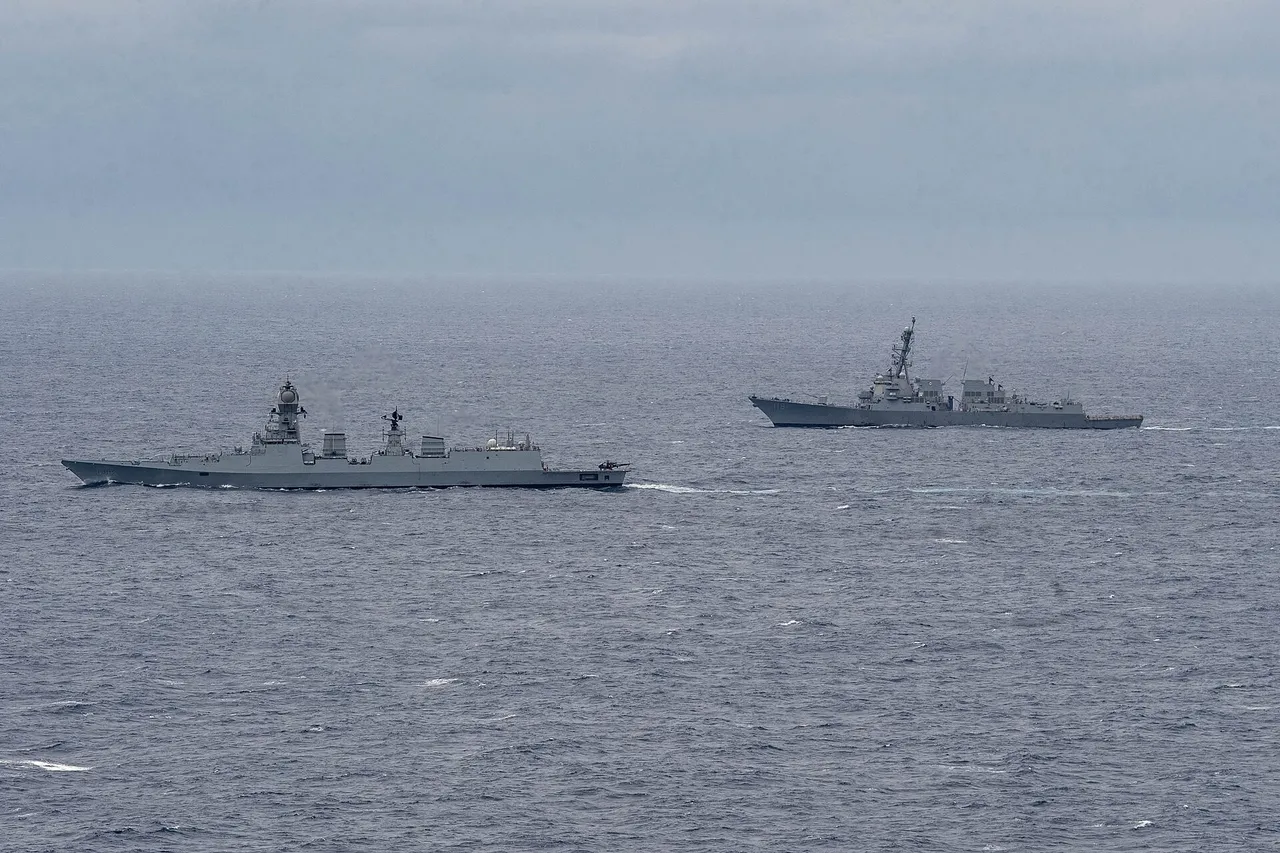
India's Defence Acquisition Council gave in-principle approval on 26 October 2026 to Project 18A, the Indian Navy's plan for a new class of large destroyers, The Times of India reported on 27 October. The paper said the destroyers were cleared under the naval platforms heading of a package the defence ministry valued at about 2.12 trillion rupees. The ministry's own statement did not name the ships and referred only to major naval platforms that would be designed and built in India.
The approval, known as Acceptance of Necessity, is an in-principle administrative step rather than a contract. According to ET Now, a proposal that receives it moves on to the Cabinet Committee on Security, chaired by Prime Minister Narendra Modi, for further consideration. The Times of India reported that competitive bidding for construction is expected in the near future.
The council is chaired by Defence Minister Rajnath Singh and, according to ET Now, includes the Chief of Defence Staff, the three service chiefs, the defence secretary and the head of the Defence Research and Development Organisation. The Times of India noted that the ministry's Monday statement earmarked 82 per cent of the overall approved procurement for Indian industry, and said the new destroyers were therefore likely to carry more locally made content than earlier classes.
The argument
Read together, the reports point to a navy that wants a small number of very large, missile-dense surface combatants built almost entirely by domestic industry. The approval fixes that direction. It does not yet fix the basic shape of the programme, and on every published timeline it will not add a hull to the fleet this decade, so its near-term effect on Indian naval power is close to nil.
Evidence and constraints
Size is the first open question, and the sources disagree. The Times of India quoted a source as saying the destroyers would displace more than 10,000 tonnes, against about 7,400 tonnes for the current Visakhapatnam class. ET Now, reporting before the meeting, put the figure at about 13,000 tonnes, while The Defense News gave a range of 13,000 to 14,000 tonnes and said conceptual plans allowed for up to 144 vertical launch cells.
Numbers and cost also differ. The Defense News reported that the programme envisaged eight to ten destroyers for about 75,000 crore rupees, and The Times of India gave a cost of more than 75,000 crore. In August, idrw.org, citing ET Now, described a plan for four ships of about 10,000 tonnes at roughly 80,000 crore. None of these figures has been published by the defence ministry.
Those gaps are not details. Four ships and ten ships would be different programmes with different industrial and budget consequences, and a jump from about 10,000 to 14,000 tonnes would change what the hulls could carry. The most reasonable reading is that the reported figures reflect briefings on a concept that the navy has yet to freeze, rather than a settled specification.
The fleet these ships would join is already substantial. The Times of India listed four Visakhapatnam-class, three Kolkata-class and three Delhi-class destroyers, plus older Soviet-built Rajput-class ships being phased out, and said a current Indian destroyer typically carries around 16 BrahMos cruise missiles and 32 medium-to-long-range surface-to-air missiles. ET Now described the navy as operating more than a dozen destroyers.
Time is the hardest constraint. ET Now and The Defense News both reported that detailed design could take four to five years, and The Defense News said construction could take a further eight to ten years, with the first ships entering service in the mid-2030s. Engines remain unsettled as well: ET Now said a hybrid propulsion model was under consideration, while idrw.org reported in August an ambition to use Indian-developed gas turbines and generators.
What could change
Three decisions will show how serious the commitment is: whether the Cabinet Committee on Security endorses the programme, how many ships and what displacement the eventual tender specifies, and whether the navy accepts imported propulsion to protect the schedule. A firm order for the larger number of ships would signal a lasting shift in fleet design, while a smaller, slower buy would suggest the approval mainly keeps the option open.
Why it matters
For the Indo-Pacific naval balance, the approval is a statement of intent rather than new capability. It tells partners and rivals that India plans to field larger and more heavily armed destroyers in the next decade, but the ships that will carry the Indian Navy's surface presence through the early 2030s are the destroyers already in service or nearing the end of their careers.
Sources
More in Analysis
India's nod for 335 more K9 Vajra guns could make a desert-bought howitzer its mainstay facing China
India's October 2026 approval of 335 more K9 Vajra-T guns builds on lessons from Ladakh, but a long road from approval to contract still lies ahead.
TaiwanDefence · 21h ago · 4 min read

Taiwan's admission that it pays for US war-game observers puts a price on quiet military ties
A 21 October 2026 report on Taiwan's NT$82.4m plan for US observers at its Han Kuang drills shows Taipei funds much of its quiet military link to Washington.
TaiwanDefence · 6d ago · 4 min read
Taiwan's plan to keep senior pilots flying to 58 may miss why most of them leave
As the plan awaits Cabinet approval, a 21 October 2026 report says workload and leave go unaddressed, while lawmakers' data point to mid-career exits to airlines.
TaiwanDefence · 6d ago · 3 min read
Discussion (0)
Comments are not currently available.