
ANALYSIS
Why India's November 2026 MH-60R milestone still leaves its warships short of helicopters
In November 2026 the US finished handing over India's 24 MH-60R helicopters, a year late. The navy's new warships are still arriving faster than helicopters.

TAIPEI —
This article is an original Taiwan Defence analysis based on the cited public sources. It distinguishes reported facts from analytical judgments and does not represent original field reporting.
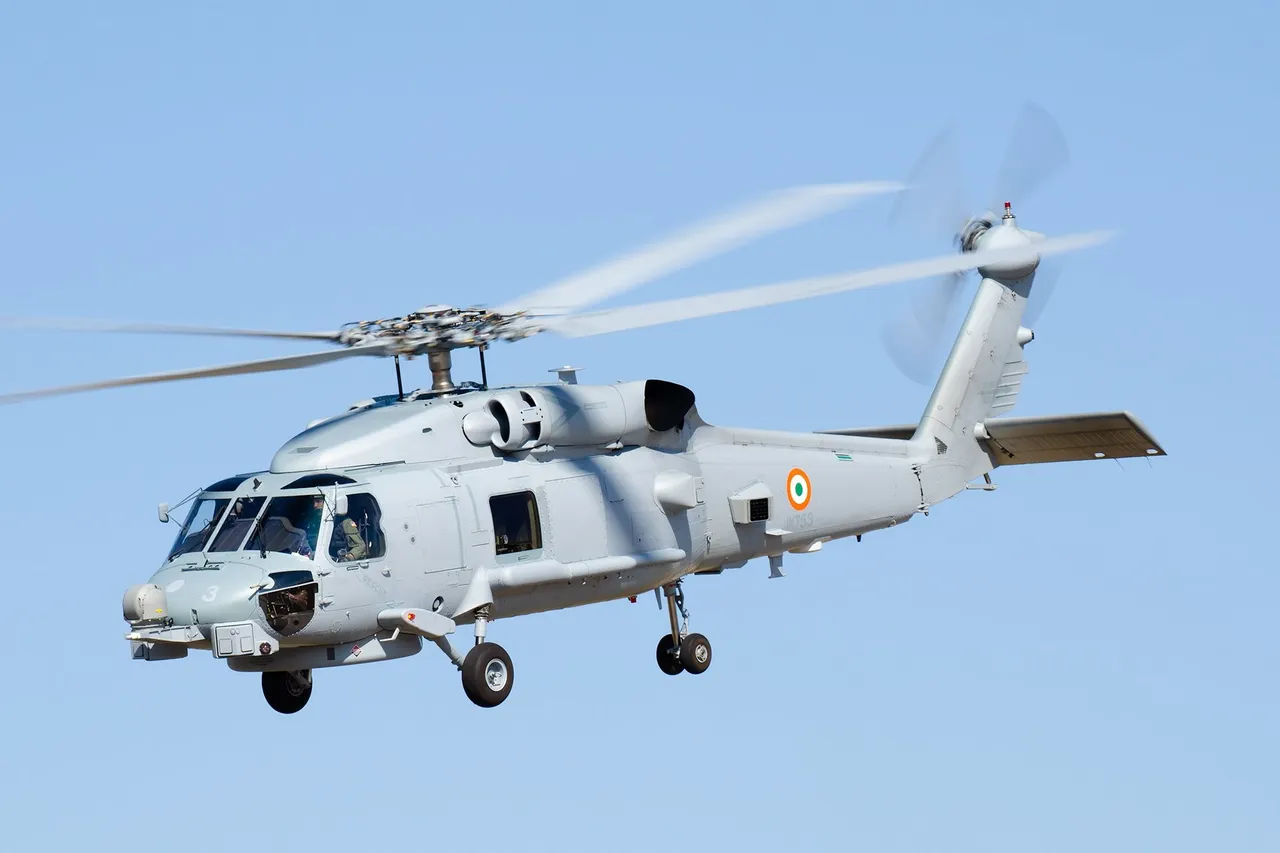
On 25 November 2026 The New Indian Express reported that the United States has handed over the last three of the 24 MH-60R Romeo multi-role helicopters India ordered, completing deliveries that were meant to end in 2025. An official told the paper that the final three will stay in the US while Indian pilots and naval air operations officers train on them, and will fly home once that training is finished.
The milestone closes a contract, not a capability gap. India's navy is adding warships faster than it is adding helicopters to fly from them, and 24 Romeos cover only a fraction of a shipborne requirement the navy puts at well over 100. Whether New Delhi places a repeat Romeo order or finally signs its long-delayed multi-role helicopter contract will decide whether the new ships can hunt submarines at full strength.
What the Romeo buy delivers
The Rs 15,157 crore deal for the Lockheed Martin-Sikorsky helicopters was signed through the US Foreign Military Sales route in February 2020. According to the paper, 18 of the 24 are already operational, the latest batch of three having arrived in July. Of the six still in the US, three are used to train crews and three are receiving India-specific upgrades, including secure Indian datalinks and communication systems, and the whole fleet will rotate through the US in batches for the same work. India also signed a five-year sustainment package worth nearly Rs 8,000 crore in November 2025.
The helicopter carries a multi-mode radar, a dipping sonar, sonobuoys and electro-optical sensors, and it can attack submarines and surface ships with Mk-54 torpedoes, Hellfire missiles and laser-guided rockets. The paper said the Romeos were deployed during Operation Sindoor in 2025 and that the navy is pressing the case for a repeat order.
More hulls than helicopters
The shipbuilding side is moving faster. Marine Insight reported on 25 November that Project 17B, the navy's programme for seven stealth frigates worth about 7.54 billion dollars, has entered its final bidding stage, with the lowest bidder likely to be picked by March 2027 and a contract targeted for March 2028. Navy chief Admiral Krishna Swaminathan has said the service is preparing to add more than 60 warships and submarines in the coming years to a fleet of about 140.
Smaller submarine hunters are arriving too. Asian Military Review reported that the navy took delivery of two anti-submarine warfare shallow water craft from Garden Reach Shipbuilders and Engineers in November, Amini on 5 November and Ashank on 23 November. They belong to a batch of 16 ordered in April 2019 and split between GRSE and Cochin Shipyard. The 78-metre, roughly 900-tonne ships carry lightweight torpedoes, anti-submarine rockets and shallow-water sonar for coastal waters.
Those coastal craft are built to work without a helicopter, but frigates and destroyers on open-ocean patrols rely on one to carry their sonar search far beyond the ship. The New Indian Express noted that new warships are being inducted at a brisk pace without enough helicopters for their decks, and every Project 17B frigate added to the queue widens that gap unless helicopter orders keep pace.
The stalled programmes
The larger shortfall lies in the 123 naval multi-role helicopters the navy has sought for warships commissioned since 1997. A first request for information was issued in 2011, scrapped, and reissued in 2017 under the strategic partnership model, and there is still no contract. The naval version of Hindustan Aeronautics' Indian Multi-Role Helicopter could meet part of the need, but it is still in design and development. Meanwhile the navy is upgrading its 10 Kamov Ka-28s, long dogged by maintenance problems, and it retired its last Sea King Mk 42B squadron, INAS 330, in June.
Lighter helicopters are on a separate track. The Times of India reported on 25 November that the navy and coast guard plan to buy 76 naval utility helicopters, 51 for the navy and 25 for the coast guard, for about Rs 15,000 crore to replace their Chetaks, probably under the Buy and Make (Indian) category. Leonardo's AW169M is among the possible contenders, while Airbus's H160M and HAL's Utility Helicopter-Maritime appear to exceed the 5,500 kg weight ceiling set in the August 2025 request for information. These aircraft would fly surveillance, rescue and transport missions rather than hunt submarines.
That distinction matters. Utility helicopters will free warships from some routine tasks, but they will not replace sensor-laden submarine hunters. The New Indian Express linked the navy's urgency to Chinese submarines operating more often in the Indian Ocean and to Pakistan's induction of eight Chinese-origin Hangor-class submarines with air-independent propulsion, which can stay submerged longer. Against that trend, a fleet of 24 Romeos spread across two coasts is thin cover.
What to watch
The signals to watch are a formal repeat order for MH-60Rs through a new Foreign Military Sales case, a decision to revive or restructure the multi-role helicopter competition, and how quickly the last six Romeos return from training and upgrades in the US. Until one of those moves, the completed delivery mainly shows how far India's helicopter fleet trails the ships it is building.
Sources
More in Analysis
Why the Marines' November 2026 push for a longer-range Naval Strike Missile matters around Taiwan
In November 2026 the Marines said they are studying how to double the NSM's 250 km reach. Yonaguni and the Batanes show what that could and could not change.
TaiwanDefence · 2h ago · 4 min read
Why North Korea's big new destroyers, tracked in November 2026, still need Russia and cannot fight alone
Imagery published in November 2026 shows two 5,000-ton destroyers settling in and yards growing, but the ships lack air and submarine cover and lean on Russia.
TaiwanDefence · 1d ago · 4 min read
Why China's fourth carrier, seen taking shape in November 2026, is about endurance more than the strait
Imagery from 12 November 2026 shows the Type 004 hull filling out at Dalian. Nuclear power would let China keep a big carrier at sea far from its coast.
TaiwanDefence · 2d ago · 4 min read
Discussion (0)
Comments are not currently available.