
ANALYSIS
Why Manila's rebuke of sea-incident publicity matters more than summit optics
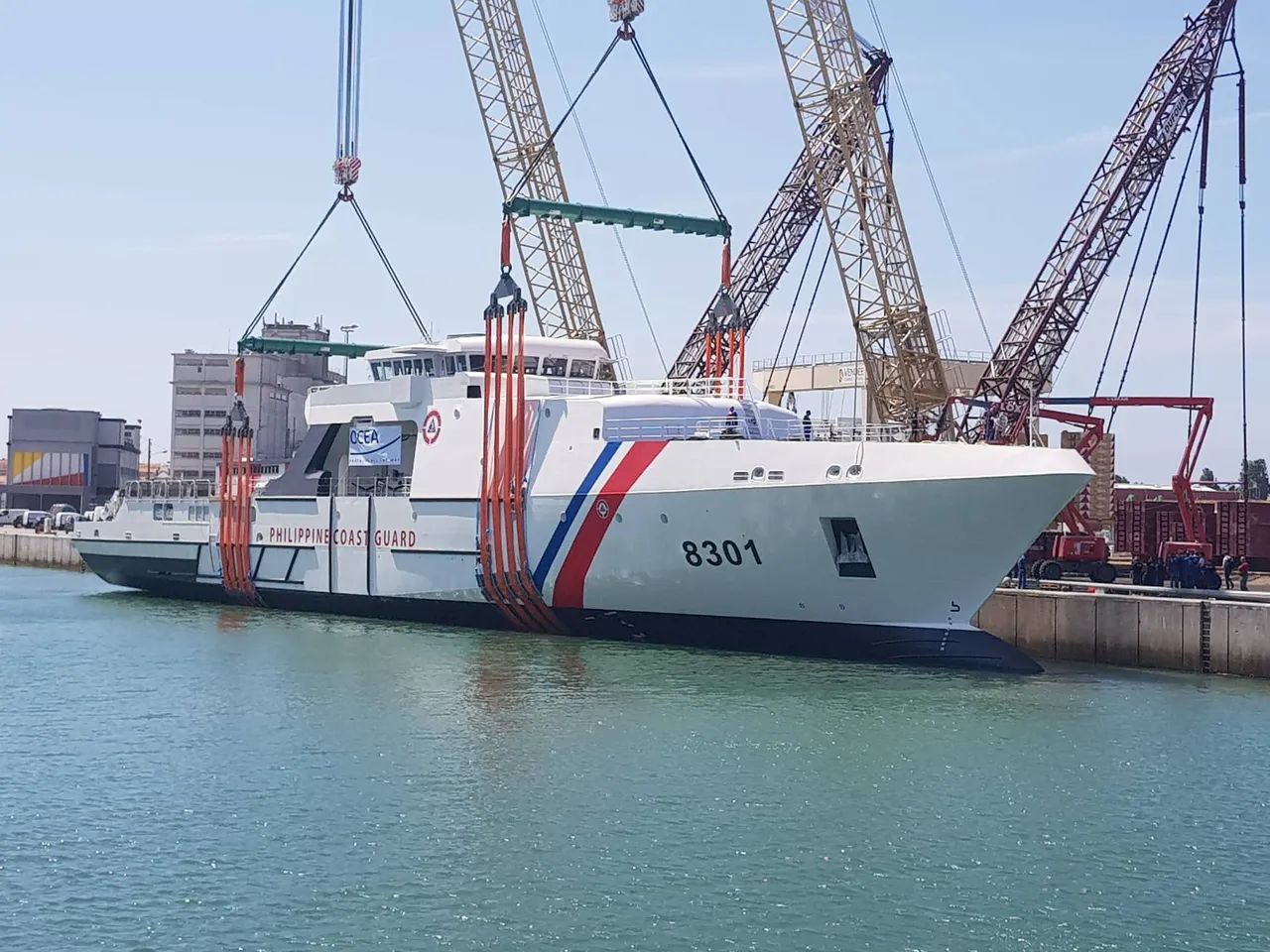
The Philippine foreign ministry said on 8 November 2026 that publicising West Philippine Sea incidents cannot replace statecraft. The choice will be tested at sea, not only at summits.
TAIPEI —
This article is an original Taiwan Defence analysis based on the cited public sources. It distinguishes reported facts from analytical judgments and does not represent original field reporting.
On 8 November 2026, the Philippine Department of Foreign Affairs issued a Sunday statement calling recent public commentary about China by unnamed government officials regrettable. The ministry said individual officials and agencies do not independently set the country's international relations, and that civilian and military officials are expected to follow the president's policy direction.
The statement said efforts to document and publicise incidents in the West Philippine Sea had established facts, countered disinformation and built international awareness. It also said transparency cannot substitute for statecraft, and that releasing footage or shaping an online narrative does not by itself act as a physical deterrent at sea or as a legal strategy.
The argument
The useful question is not whether presidents run foreign policy. It is whether Manila is now treating the coast guard and armed forces habit of publishing Chinese actions at sea as a diplomatic problem in the days before it hosts ASEAN leaders and before APEC meets in Shenzhen. That is a grey-zone choice, not only a protocol reminder.
Evidence and constraints
GMA reported that the statement followed a 3 November telephone conversation between Foreign Secretary Ma. Theresa Lazaro and Chinese Foreign Minister Wang Yi, which the department described as part of a deliberate effort to keep bilateral relations stable before, during and after the ASEAN summit in Metro Manila from 16 to 18 November 2026 and the APEC Economic Leaders Meeting in Shenzhen on 18 and 19 November.
Philippine reporting said Wang claimed during that call that the relationship faced malicious interference by certain Filipino politicians, and that he urged Manila to exercise caution, control relevant personnel and issue a unified statement on its China policy. Those are Chinese official claims, not independently confirmed findings.
Defence Secretary Gilberto Teodoro called Wang's remarks a threat of censorship, according to the Philippine Star. The foreign ministry did not name the officials it was rebuking. GMA reported that the Chinese Embassy in Manila has repeatedly clashed with Teodoro, whom China has banned from visiting, and with Rear Admiral Jay Tarriela, the coast guard spokesperson for West Philippine Sea matters.
BusinessMirror reported that the statement came a day after Tarriela, who also heads the coast guard Transparency Group, published an opinion piece arguing that videos, photographs and real-time information had changed the information battle against Beijing and helped generate international support. In that account, Tarriela said transparency and diplomacy serve complementary functions and that ending the publicity would reduce global scrutiny of Chinese activity in disputed waters.
Channel News Asia described the statement as a rare rebuke and said the uniformed services have been engaged in a long-running war of words with the Chinese government over the South China Sea. It reported Manila-based security analyst Chester Cabalza as saying the foreign ministry had gone public to assure counterparts, particularly China, that it was in control of foreign policy, while the defence department and coast guard are obliged to shape security policy, not foreign policy.
The ministry said officials had incorrectly merged documentary evidence, public rhetoric and official diplomatic messaging, and that public statements which undermine the government's diplomatic approach can project internal division that external parties can exploit and can weaken the Philippine negotiating position. It said professional advice from the national security establishment belongs in internal channels, and that internal debates should stay inside established inter-agency mechanisms.
The department also pointed to the 2016 South China Sea arbitration, saying that ruling was secured through legal proceedings under international law rather than through public messaging or social media.
What could change
What the statement does not yet show is a change in patrols, in the number of incidents, or in how much footage the coast guard actually releases after 8 November 2026. The test will be whether ships and aircraft keep publishing documented encounters in the weeks around the Manila summit, or whether those records move behind closed doors. A later clarification from the coast guard or the defence department would show whether the rebuke was a warning about tone or a curb on the transparency campaign itself.
Why it matters
For Taiwan, the immediate military balance in the Taiwan Strait does not turn on a Philippine press statement. The information environment around Chinese grey-zone tactics does. The Philippines is a US treaty ally whose coast guard has put videos and photographs of Chinese actions into the public record. If that record is treated as a diplomatic liability just as regional leaders gather, the wider region, including Taiwan, will have one fewer regular public account of how China operates in contested waters near the Luzon Strait and the South China Sea.
The ministry is right that footage alone is not a force that can break a blockade, and that it is not a substitute for the 2016 legal award. The risk is the opposite error: treating the legal award and closed-door talks as if they make the public record optional. In a grey-zone contest, the record is part of how smaller coast guards keep incidents from being rewritten after the fact. Manila's 8 November 2026 statement does not end that contest. It does decide, for the summit season, which Philippine voices are allowed to keep writing it down.
Sources
More in Analysis
Why the November 2026 F-16 weapons report matters more for Taiwan than the new jets' arrival
A defence ministry report covered on 9 November 2026 shows Taiwan's new F-16s will fly for years before their glide bombs and jamming pods are complete.
TaiwanDefence · 13h ago · 4 min read
Why the Fujian carrier's 5 November first anniversary matters more for Taiwan than China's combat claims
China marked the Fujian carrier's first year in service on 5 November 2026; its repeated passages around Taiwan matter more than claims of full combat power.
TaiwanDefence · 17h ago · 4 min read
Why China's 5 November TB-001 drone flight past Okinawa matters for Taiwan's eastern flank
China flew an attack-capable TB-001 drone toward Japan's Danjo Islands on 5 November 2026, one of several recent drone loops that also skirt Taiwan's east side.
TaiwanDefence · 18h ago · 3 min read
Discussion (0)
Comments are not currently available.